
Generational Wounds That Never Healed, A Cultural Divide That Keeps Widening; Black America’s Holocaust Ends Or Renews
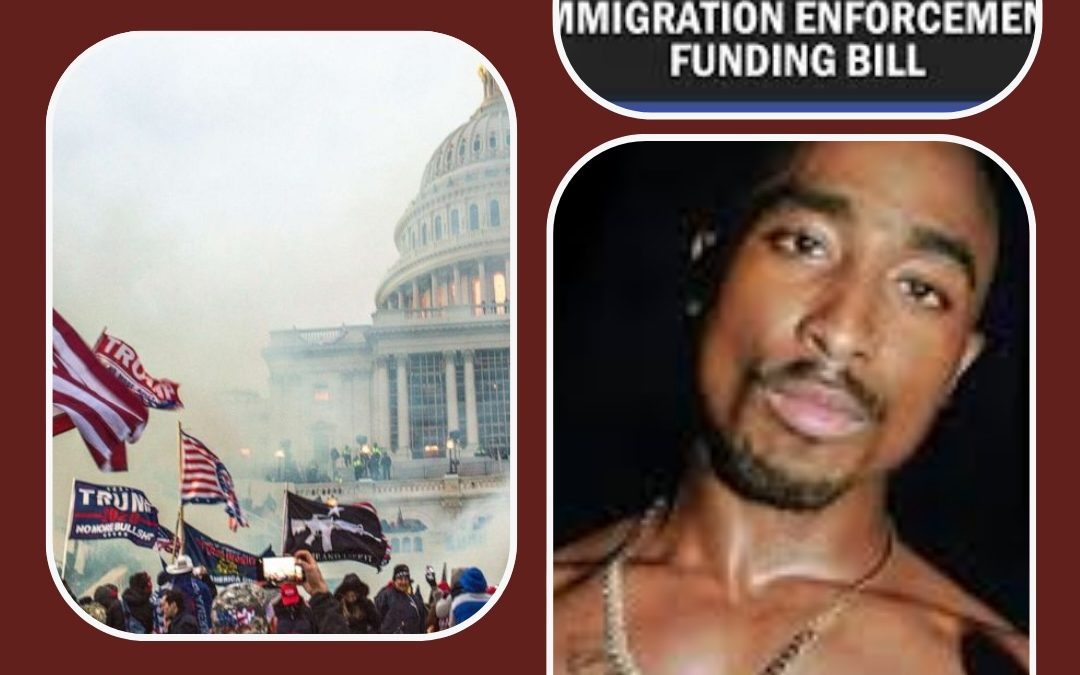
The President of America is looking to fund a personal army, composed of insurrectionists who’ve already stormed Capitol Hill once—just for the hell of it. Now, imagine them all armed, with badges, and wearing matching “brown shirts” as a result of an act of Congress.
Since the 1960s, the Civil Rights generation has tried to fulfill “The Dream” while ignoring reality: before the racist forces in America will share this nation, they will destroy it.
Dr. King’s Burning House
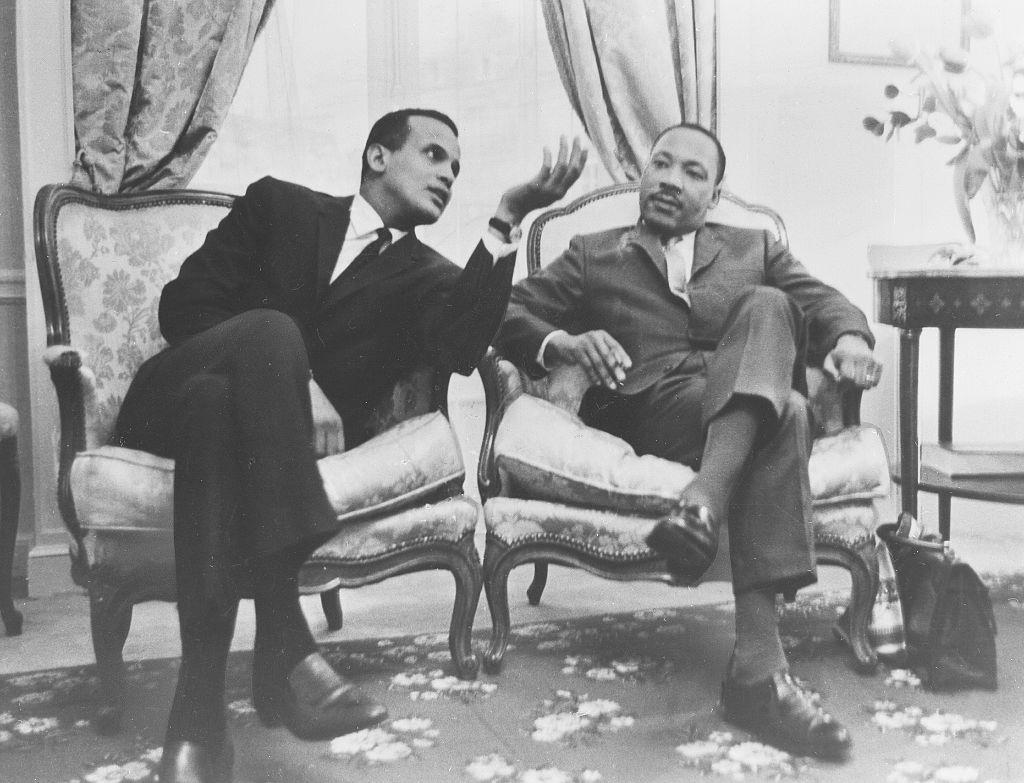
“I fear I am integrating my people into a burning house,” Dr. Martin Luther King Jr. confessed to acclaimed actor Harry Belafonte shortly before his assassination in 1968.
Belafonte recounted the conversation: “I asked him if he felt with all of this energy that we’ve expended for peace and for brotherhood… if we’re integrating into a burning house, what would that make of us?”
Dr. King’s reply: “We’re just going to have to become firemen.”
The “burning house” Dr. King feared wasn’t just a metaphor for social unrest; it was a blueprint for a specific kind of American architecture. Since the 1960s, the response to Black progress hasn’t been a change of heart, but a change of tactics.
- Mass Incarceration: Between 1970 and 2020, the U.S. prison population grew by 500%. Despite making up roughly 13% of the U.S. population, Black Americans represent nearly 38% of the incarcerated, a disparity fueled by the “War on Drugs” that targeted the very communities MLK hoped to save.
- The Wealth Gap: In 1968, the median Black household had about 7% (.07 cent to every $1) of the wealth of the median White household. By 2024, despite decades of “equal opportunity” rhetoric, that figure remains virtually unchanged at roughly 10 to 15 cents for every dollar of White wealth.
- Voter Suppression: Since the Supreme Court gutted the Voting Rights Act in 2013 (Shelby County v. Holder), over 25 states have enacted restrictive voting laws. The “beast” didn’t just get unchained; it was given a seat at the Board of Elections.
By 1968, King understood the fundamental flaw of the era: love was not enough. Integration alone could not dismantle hatred baked into the foundation of the state. To King, being a “fireman” meant that future generations would have to take on the exhausting, perilous responsibility of actively extinguishing systemic injustice.
He didn’t anticipate, however, that America would decide it was easier to shoot the firemen, arrest them in a mass incarceration hellscape, or brand them as domestic terrorists.
Tupac wasn’t glorifying criminality; he was diagnosing a condition. He understood that in a society where the “firemen” are viewed as a threat to the fire, the uniform doesn’t matter.
The Prophecy of the Thug
“When I say T.H.U.G. L.I.F.E., I mean that shit, because these white folks see us as thugs! I don’t care what y’all think. Even if you are a Lawyer, a Man or an African American,, we all thugs and niggas to these motherfuckers.” — Tupac Amaru Shakur, Indiana Black Expo, 1993
When Tupac spoke those words, he was dismissed by the Black elite as a profane, nihilistic distraction. To the “suited-and-booted” generation, his vernacular was an embarrassment. Yet, thirty years later, MAGA has made him prophetic.
The divide between the Civil Rights generation and the Hip Hop generation was a tragedy of timing. One side was desperate for a level of respectability that would ensure safety; the other was shouting that safety was a myth!
DEFINITION OF T.H.U.G L.I.F.E. – The Hate U Give Little Infants Fucks Everybody
The shift from the “fireman” of the 1960s to the “thug life” of today wasn’t just a change in vocabulary; it was the recognition of a siege. While the elders were busy rearranging the furniture and prettying-up a house that was still very much on fire, a new generation was realizing that the exits had been barred from the outside.
The divide that Tupac tried to bridge in 1993 was not just about music; it was about two different understandings of white supremacy. The older generation believed in the alchemy of respectability politics—that by being “good,” “articulate,” and “upstanding,” they could neutralize–or last– American racism. Tupac understood the static nature of America’s racial hierarchy: to the white supremacist, the PhD and the person on the corner are viewed through the same lens of dehumanization.
Tupac wasn’t glorifying criminality; he was diagnosing a condition. He understood that in a society where the “firemen” are viewed as a threat to the fire, the uniform doesn’t matter. Whether you wear a suit, a lab coat, or a hoodie, the systemic gaze remains the same. A reality MAGA revealed in dramatic fashion.

From the Fields to the Front Office
Today, as the “militias” move from the woods of Idaho to the halls of the Capitol, we are no longer waiting for the house to stop burning. We are realizing that the fire was intentional.
The rise of modern extremism isn’t a “return” to the past—it is the past finally dropping its mask.
The “personal armies” and “brown shirts” discussed today are simply the high-tech iterations of the lynch mobs and slave patrols of yesterday.
The current political climate isn’t a sudden aberration; it is the culmination of decades of unchecked radicalization. While the mainstream focused on the progress of the 2000s, the radical right was consolidating.
- 1980s: The KKK began formalizing alliances with Neo-Nazi organizations, shifting from purely racial animus to anti-government insurrectionism.
- 1990s: The militia movement surged. The standoffs at Ruby Ridge (1992) and Waco (1993), followed by the Oklahoma City Bombing (1995)—the deadliest act of domestic terrorism in U.S. history—served as a warning that the “nut jobs” were no longer just in the shadows.
- 2020s: That ideology, meshed with the Religious Right and Evangelical Christians, moved from the shadows to the halls of the Supreme Court and the Oval Office.
We are now witnessing the “Project 2025” era of governance, where the administrative state is being dismantled to make room for loyalist enforcers.
 The dismantling of the Voting Rights Act, the crusade against Diversity, Equity, and Inclusion (DEI) initiatives, and the weaponization of the justice system against activists are not “policy differences.” They are the tools used to fireproof the burning house, ensuring that those who see the flames cannot reach the exits.
Beyond the Dream
God did not negotiate with the devil; He chained the beast!
We must admit that the Civil Rights movement was misinterpreted as an invitation to assimilate into a morality that never existed in the hearts of men (and women) who serve as the architects of white supremacy. You cannot simply love evil enough to change hearts and minds.
As we stare down the barrel of a future where paramilitary forces may roam our streets with federal sanction, the “I Have A Dream” era must give way to a new clarity.
The firemen are still here. They are in the streets, in the classrooms, and in the digital spaces organizing. But they are no longer asking for a seat at the table. They are realizing that if the house is burning, either we extinguish the hate, or we let the structures of the past burn to ash.
The fire is no longer a metaphor. It is the political reality of 2026.
 Detroit IP TV is a local affiliate of the